
- Baltimore Acupuncture LLC1501 Sulgrave Avenue, Suite 310
Baltimore, MD 21209(443) 254-6841 

Traditional Chinese Medicine
Can Acupuncture Bring Relief Between Multiple Sclerosis Relapses?
A diagnosis of multiple sclerosis (MS) can change life in an instant. One minute you’re seemingly fine and the next you find yourself in a neurologist’s office. Symptoms can creep in over a few months. Symptoms like tingling in the hands, unexplained fatigue that sleep doesn’t fix, and moments where your legs feel like they don’t belong to you.
MS is a chronic neurological condition where the immune system mistakenly attacks the protective covering of nerves, disrupting communication between the brain and body. Symptoms vary widely and include fatigue, pain, mobility issues, bladder dysfunction, and cognitive challenges, but what unites many patients is unpredictability.
Conventional treatments helped manage disease progression, but the day-to-day symptoms can remain. Many people with MS explore complementary therapies, not as replacements, but as support. And that’s where acupuncture comes in. continue reading
Acupuncture for Stress and Anxiety: A Research-Backed Guide to How and Why It Works
Stress and anxiety have become defining health concerns of modern life. Fast communication, demanding schedules, and constant stimulation keep many people in a near-continuous “fight-or-flight” state. Over time this activation can disrupt sleep, digestion, mood, immune function, and cardiovascular health.
While conventional treatments such as psychotherapy and medication can be highly effective, many individuals seek complementary approaches that regulate the body rather than simply suppress symptoms. One of the most studied integrative options is acupuncture, a traditional East Asian medical therapy practiced for thousands of years and increasingly validated by modern clinical research. continue reading
How an Ancient Therapy Supports Modern Reproductive Health
Infertility affects millions of couples worldwide, and for many, the journey to conception involves more than medical testing and assisted reproductive technologies (ART) like IVF. Increasingly, patients and clinicians are exploring integrative care, combining conventional medicine with evidence-informed complementary therapies. Among the most studied of these is acupuncture, a component of Traditional Chinese Medicine (TCM) practiced for more than 2,000 years.
Today, acupuncture is not viewed simply as an “alternative” therapy, but as a supportive physiological intervention that may influence hormonal regulation, blood flow, stress response, and reproductive function. While research findings are mixed and nuanced, a growing body of clinical evidence suggests acupuncture can play a valuable adjunct role in fertility treatment and natural conception efforts. continue reading
The Benefits of Gua Sha: Ancient Technique, Modern Science
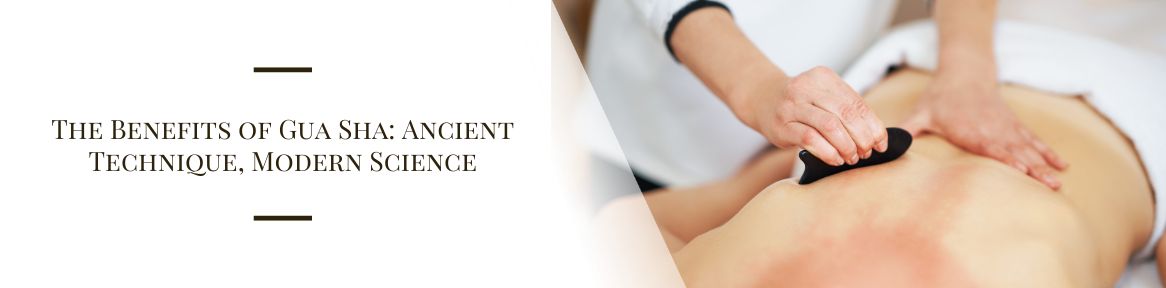
For centuries, practitioners of Traditional Chinese Medicine (TCM) have used Gua Sha to promote healing, circulation, and balance in the body. Think of it as a scraping therapy performed with a smooth-edged tool. Today, it has evolved from a full-body therapeutic practice into a global wellness and skincare ritual used by acupuncturists, massage therapists, estheticians, athletes, and everyday consumers.
But beyond the viral beauty videos and jade tools lies a growing body of research exploring what Gua Sha does physiologically. Surprisingly, many of its claimed benefits like pain relief, improved circulation, reduced inflammation, and lymphatic movement, now have measurable biological explanations. continue reading
Meridian Theory: The Ancient Map of the Body
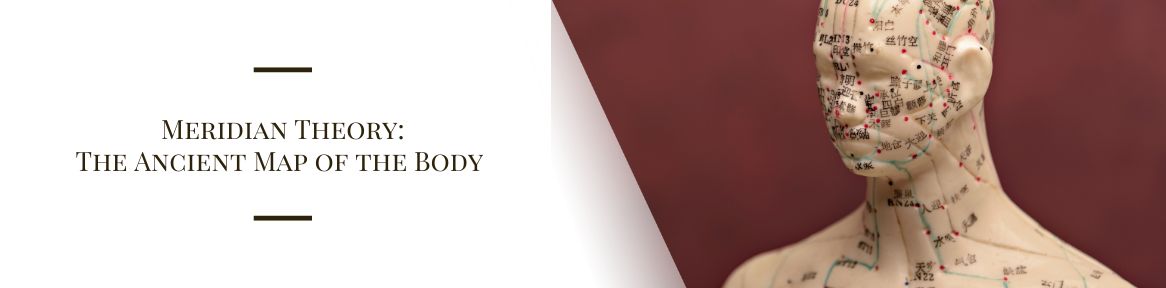
For thousands of years, practitioners of Traditional Chinese Medicine (TCM) have described the human body using a very different “anatomy” than modern Western medicine. Instead of nerves, vessels, and organs alone, they spoke of an energetic network or a communication system linking every structure, function, and sensation.
This network is called the meridian system. Today, interest in acupuncture, fascia research, bioelectric signaling, and integrative medicine has brought Meridian Theory back into scientific conversation. Researchers are now asking: Are meridians symbolic or do they represent real physiological pathways? continue reading